

Adam Carter also honored by NFCA
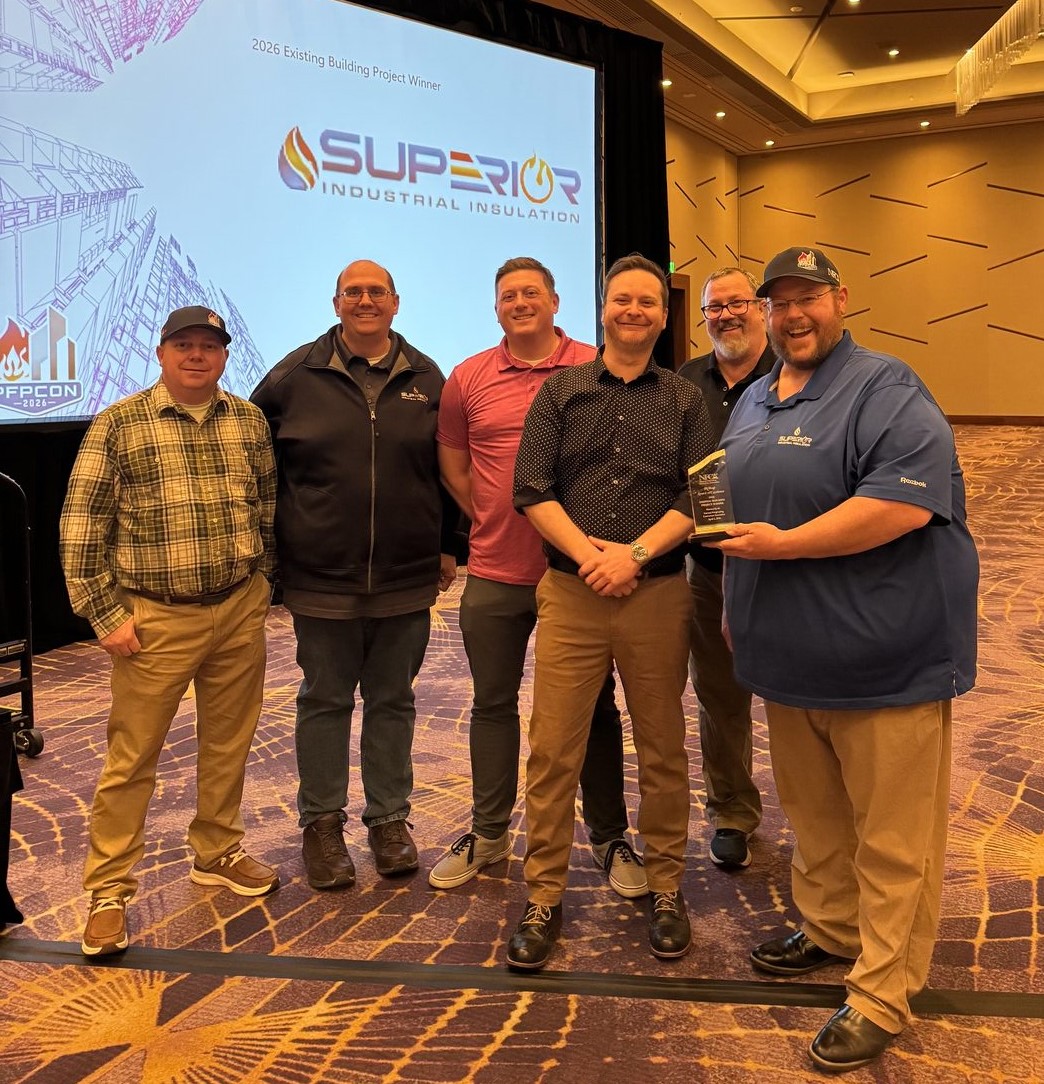
Superior Industrial Insulation is honored to have been recognized with the 2026 NFCA (National Fireproofing Contractors Association) Award of Excellence in the existing high-rise building category — one of the most respected awards in the commercial and industrial fireproofing industry.
This award recognizes outstanding project execution, workmanship and contribution to the advancement of passive fire protection standards. Adam Carter, Director of Fire and Life Safety, presented the project via virtual meeting during the 2026 FCIA/NFCA Conference
Watch the full award presentation on YouTube → (Jump to the 29:00 mark to hear Adam walk through the project and watch the project video.)
The Project: Rhodes Tower, Columbus, Ohio
The award-winning project took place in the James A. Rhodes State Office Tower, a 42-story state office building on Capitol Square in Downtown Columbus. The facility is named in honor of James A. Rhodes, who was elected Ohio’s governor in 1962, 1966, 1974 and 1978. There are approximately 2,500 State employees who occupy the facility.
The high-rise underwent a massive elevator modernization program that required comprehensive fireproofing upgrades within the building’s elevator and mechanical shafts throughout the course of the project.
This was not a typical fireproofing job. It was one of the most logistically complex, safety-critical and technically demanding projects the Superior Insulation team has ever undertaken.
Working Inside an Active, Occupied High-Rise
The central challenge at Rhodes Tower was simple to explain but extraordinarily difficult to execute. Critical life-safety fireproofing improvements were required within the core of a fully operational 42-story government building. The work needed to be completed without disrupting the thousands of people working in the building every day.
The scope required installing high-density spray-applied fire-resistive material (SFRM) to structural steel located deep inside active elevator shafts and mechanical chases throughout the tower. These spaces are narrow, difficult to access and central to the building’s daily operations — unlike anything encountered on a conventional construction site.
Since Rhodes Tower is an active government facility, our crews were not just following typical construction protocols. Every worker needed to pass a background check before setting foot on the site, and then had to clear daily security screening, including metal detectors.
As Carter noted during the presentation, coordinating personnel clearances in an active government building added a significant layer of complexity to daily operations that most contractors never encounter.
Fireproofing Inside Active Elevator Shafts — With Occupied Elevators Running All Around
Perhaps the most striking aspect of the project involved crews working inside elevator shafts, spraying structural steel while adjacent elevators — in shared shafts — continued carrying building occupants to and from different floors.
Elevators had to be taken out of service one at a time to preserve building access. This required precise scheduling, constant coordination with building management and elevator operators, and an unwavering commitment to sequencing that never disrupted the people who depended on the elevators to function normally.
To perform the work, one crew member stood on top of an elevator car, spraying steel 10 to 15 feet from another elevator that was actively transporting people.
Spray equipment was set up inside the elevator cars, with additional crew members riding on top of the cars during application. Power and compressed air were routed through the shaft from designated floors, creating a vertical supply chain that allowed safe, continuous work within the confined space.
Mechanical Shafts, Tight Platforms, and Creative Logistics
The mechanical shafts presented their own set of challenges. Crews worked from platforms measuring just 36 x 54 inches, positioned every three floors throughout the tower. Delivering fireproofing material to these work areas required innovative thinking. This included material mixing stations established within the building, and multiple pumping strategies developed after determining the safest and most efficient method of delivering material vertically through the building’s core.
Navigating On-Site Discoveries and Complex Change Orders
Mid-project, an additional challenge emerged. Original architectural quantity calculations overestimated the fireproofing area in some areas, while additional exposed structural steel was discovered that required fire protection. Reconciling these discrepancies required close collaboration with the general contractor to negotiate complex deductive change orders, while ensuring every newly identified piece of steel received the required fire protection coverage.
The Result: A Benchmark for Fireproofing Excellence in Existing Structures
Throughout the project, daily protective measures were installed and removed to maintain a clean, safe and fully operational environment for the building’s occupants. The teamwork between Superior’s installers, elevator operators, project management and building personnel included strict scheduling and safety standards from start to finish.
Rhodes Tower stands as a benchmark for what fireproofing in complex, existing structures demands, and what a truly skilled, safety-focused contractor can achieve.
This was one of the more complex existing-structure projects Superior Industrial Insulation has ever completed.
We extend our deepest gratitude to our crews, project managers and all the partners whose coordination made this project — and this recognition — possible.
Adam Carter Receives NFCA Achievement Award for Service to the Passive Fire Protection Industry
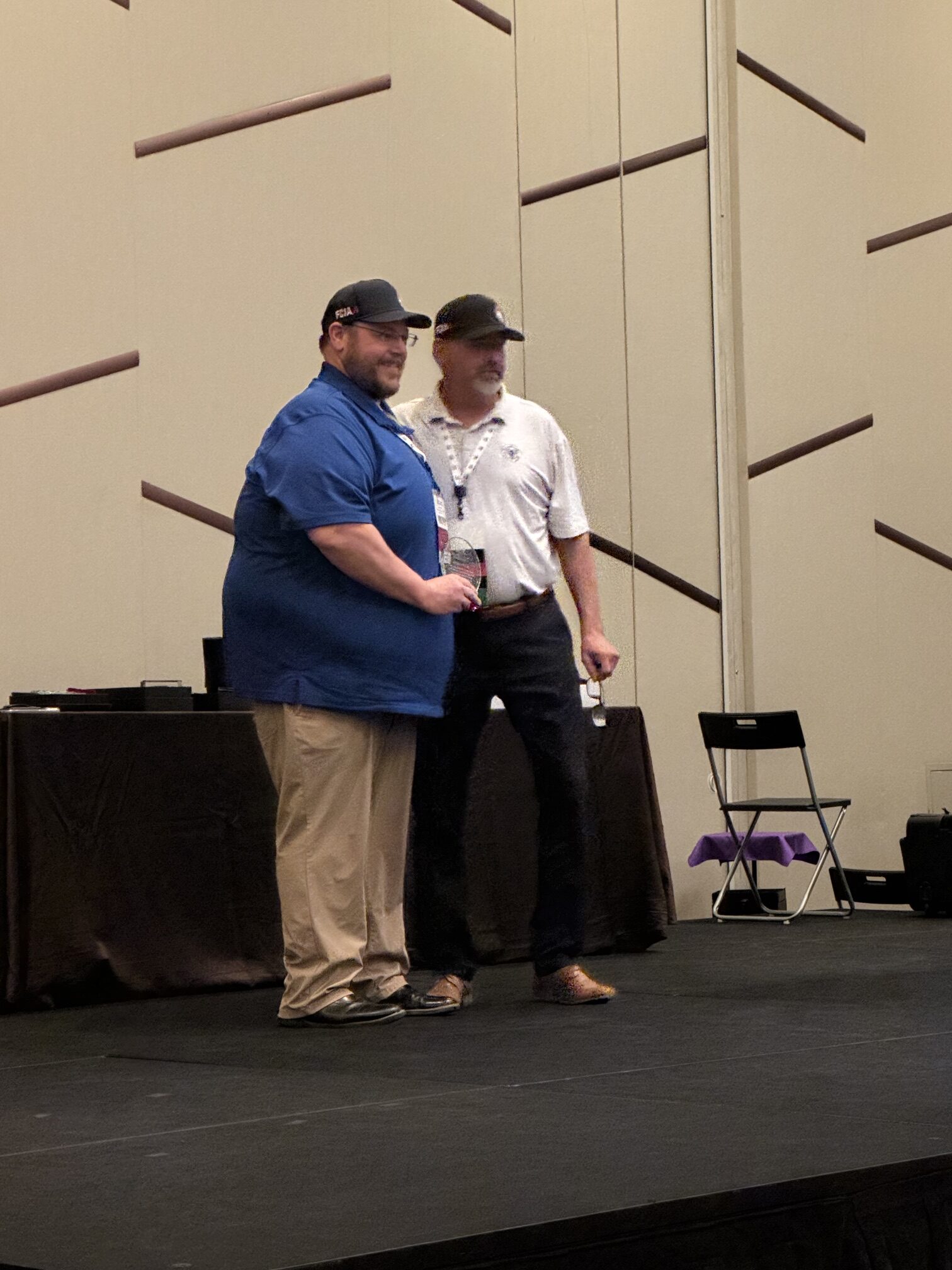
We are also proud to celebrate Adam Carter, Superior Industrial Insulation’s Director of Fire and Life Safety and Second Vice President of the NFCA, who was recognized at the 2026 FCIA/NFCA Conference with the NFCA Achievement Award for Service to the Passive Fire Protection Industry.
Being honored by his peers is a reflection of the tireless hours and hard work Carter has put in behind the scenes, and a reminder that sustained effort in service of an industry does not go unnoticed.
After working for a distribution company, Carter joined Superior in 2012, in what would become a defining chapter of his professional journey
For Carter, his drive to succeed comes from the people he works to help.
“Simply put, it’s the people and the customers I have the opportunity to work with every day,” he said.
Passive fire protection is not a flashy feature. It operates in the background, inside walls, above ceilings, within elevator shafts and mechanical chases. Most building occupants never see it, but it is important.
“The work Superior performs has the potential to save lives in the future,” he said, and that sense of purpose is at the heart of everything his team does.
Carter was quick to share credit for the award.
“I thank everyone who supports and helps me every day to be successful here at Superior,” he said. “This recognition would not be possible without the teamwork and dedication of the people around me.”
Congratulations, Adam. We are proud to have you leading the charge.